



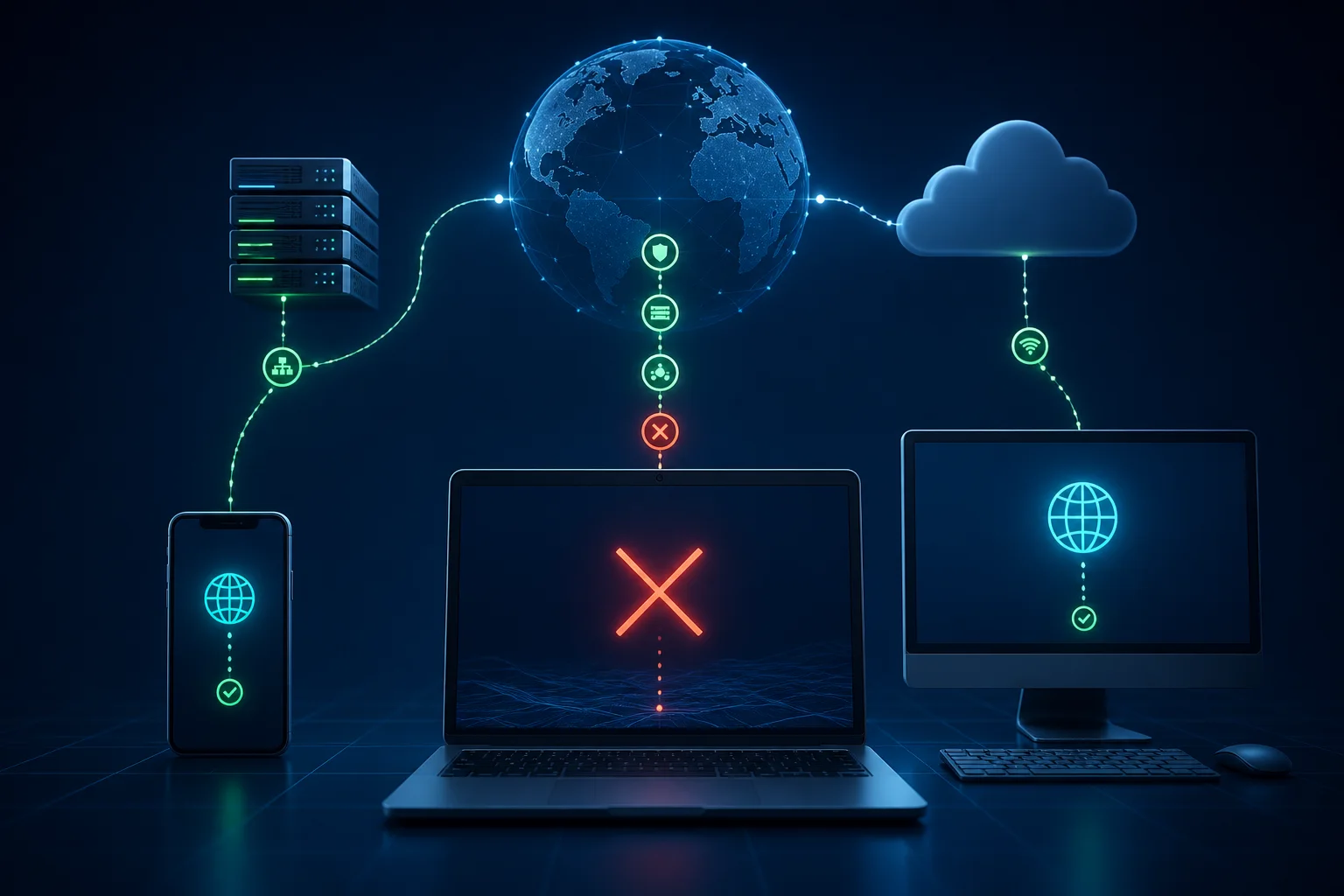







The box called a “modem” at home often combines several functions: access-line termination, routing, Ethernet switching and wireless access. Separatin...

A phone appearing twice in your router's device list does not necessarily mean an intruder has joined the network. The phone may be using a private Wi...

Packet loss means some transmitted packets do not reach their destination. A choppy call can be a symptom, but it is not a diagnosis: high latency, ch...
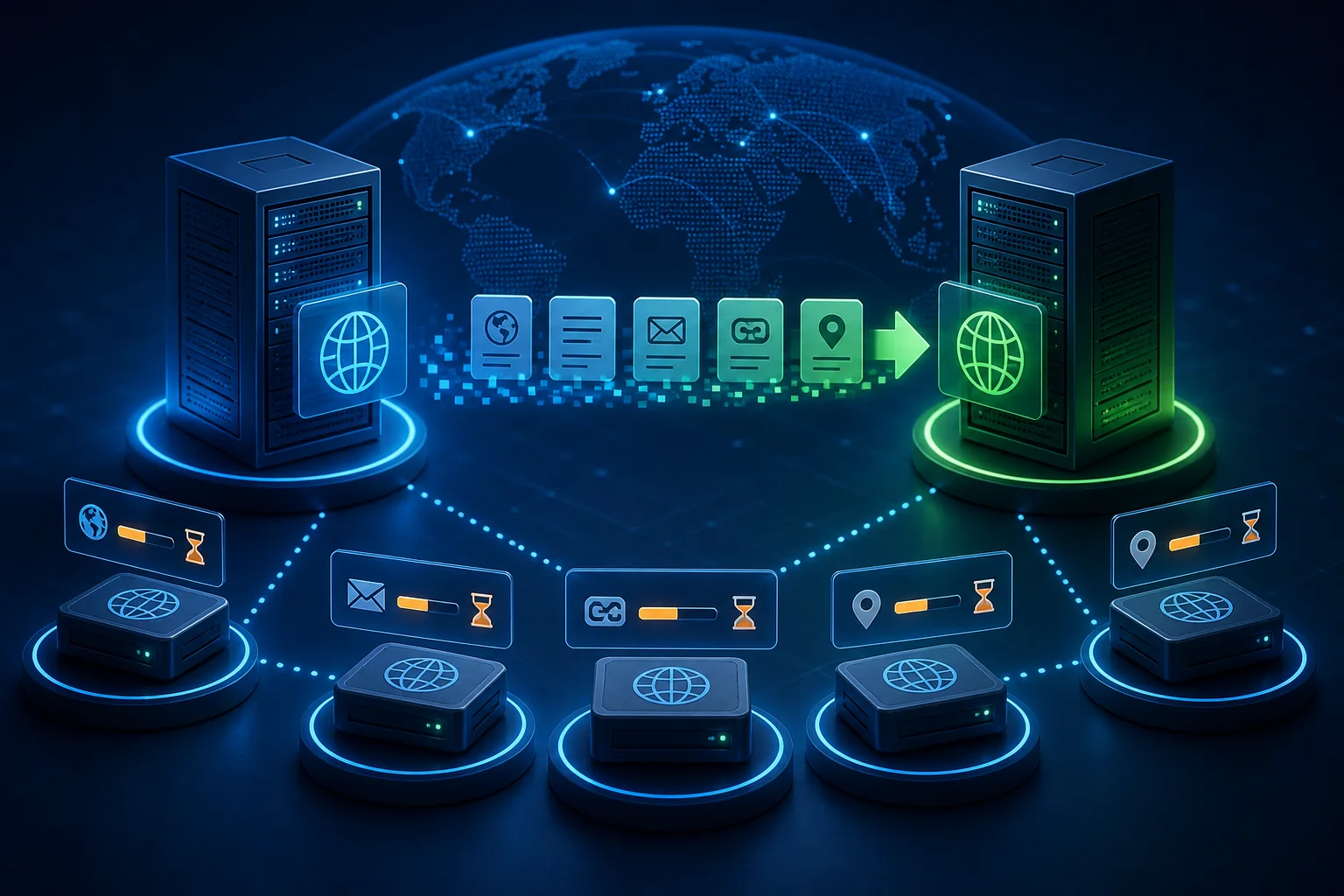
Changing a DNS record and moving every client to a new address are separate events. An authoritative server may publish the new answer while recursive...
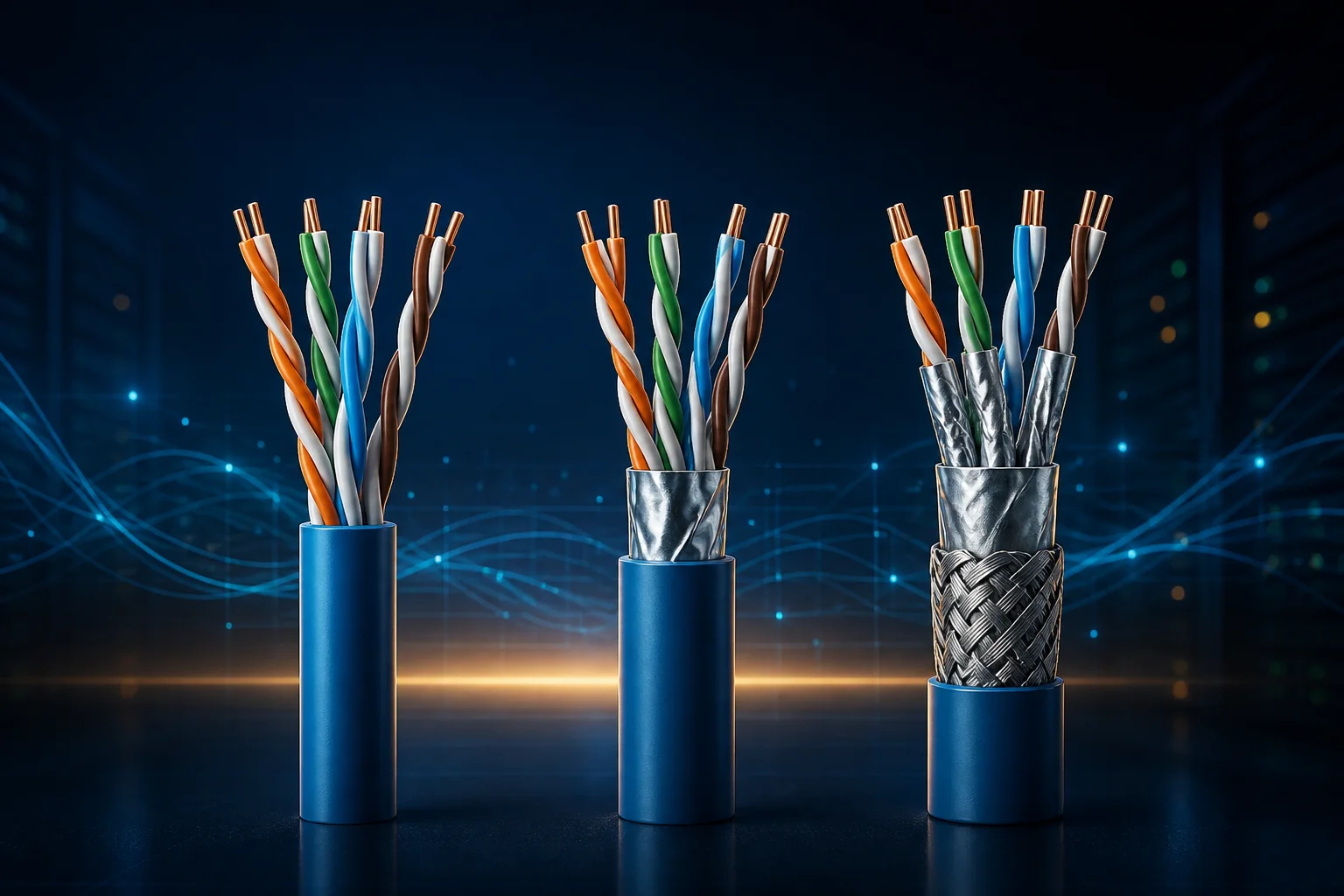
When comparing Cat5e, Cat6 and Cat6A, separate cabling performance, negotiated Ethernet rate and measured application throughput. A higher category la...
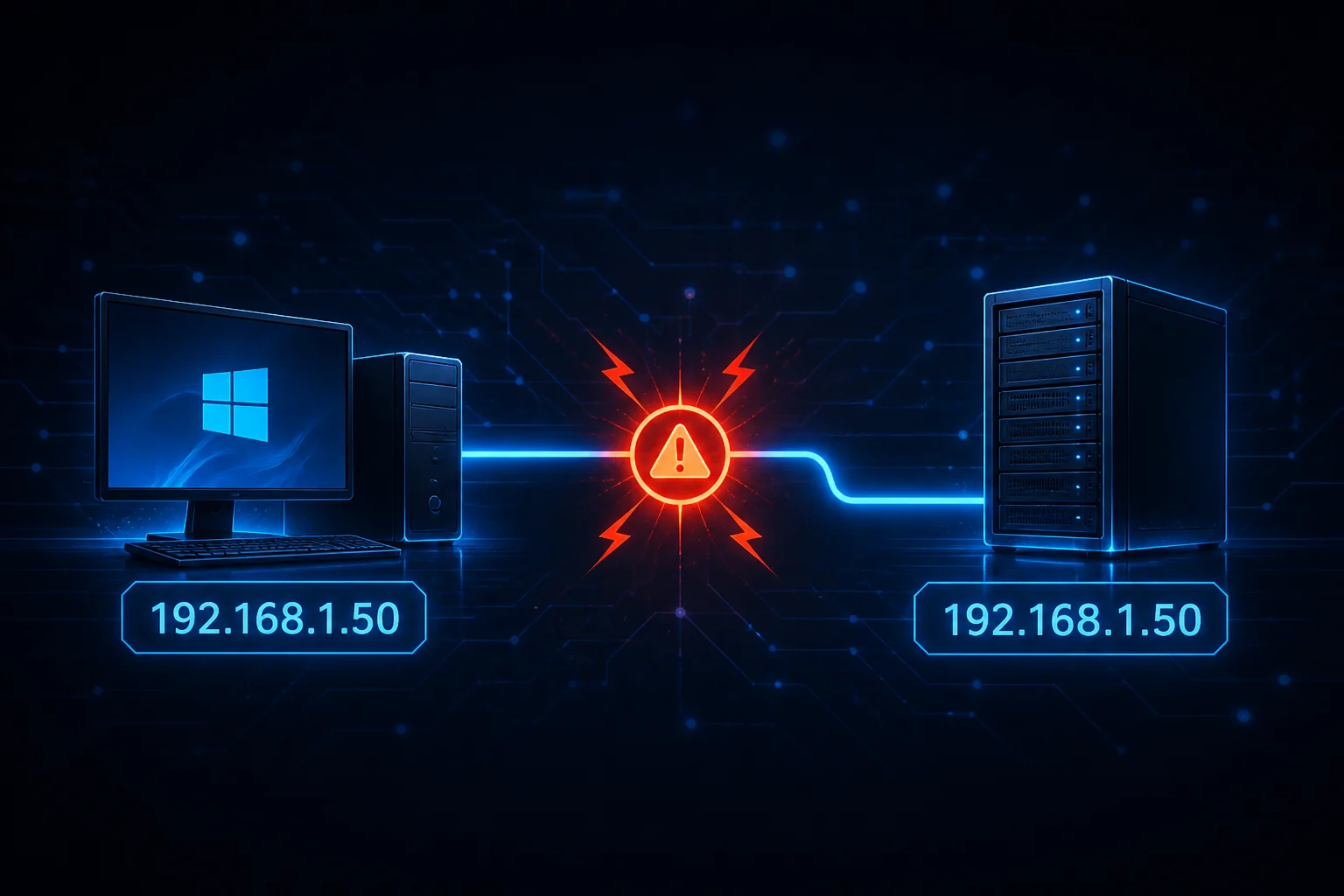
A ping reply does not establish an IP address conflict. Stronger evidence includes different MAC addresses claiming the same IPv4 address or repeated ...

An address conflict occurs when multiple devices unintentionally use the same address in the same local network context. This article focuses on commo...

Ethernet is a technology family, not simply the cable plugged into a computer. It covers frame communication and multiple physical media, including tw...

The OSI model separates communication responsibilities into seven conceptual layers. It does not require every computer to run seven distinct programs...

Traceroute shows intermediate points that respond to its probes toward a destination. It is not a complete physical network map, and the first row con...

Ping sends ICMP Echo requests and reports whether replies arrive, together with their round-trip times. It does not test an HTTP response, establish t...

NAT translates IP addresses as traffic crosses between networks. A familiar home use lets several devices share a public IPv4 address, but that is not...
Sponsors


Apps

